Complete, Balanced and Complimentary Food

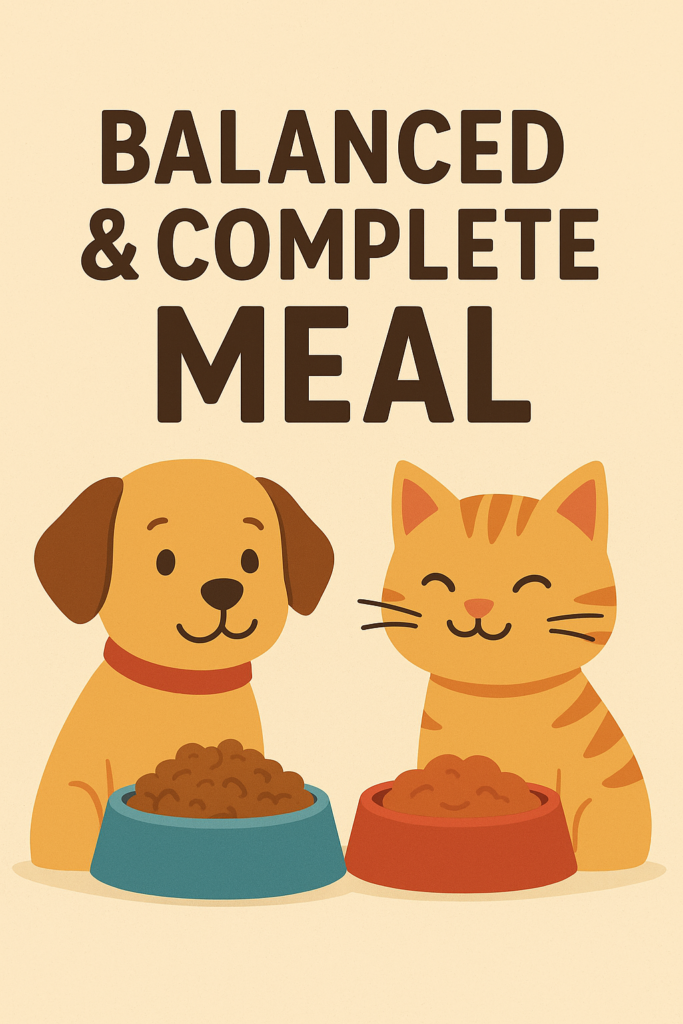
When it comes to feeding our fur kids, we usually go with the most convenient commercial food there is on the market which is the dry food (kibbles). Sometimes, we didn’t read the ingredient lists and just get what’s affordable at that point of time. But do you know, not all food at the pet store are complete or balanced? Some of them might just be a complimentary food that we add as a topper or feed it as tea break.

Here’s a break down of what complete, balanced and complimentary food are:

1. Complete Food – This type of pet food contains all the essential nutrients (proteins, fats, carbohydrates, vitamins, and minerals) in the right proportions to meet the daily nutritional needs of a pet. Pets can thrive on a complete diet without needing additional supplements.


2. Balanced Food – A balanced diet ensures that the nutrients are provided in the correct ratios for a pet’s specific life stage (puppy/kitten, adult, senior), activity level, and health status. A balanced food is always complete, but some complete foods may not be fully balanced for specific needs.


3. Complementary Food – This food is meant to be fed alongside other foods because it does not contain all essential nutrients in the right amounts. Treats, mixers, and toppers fall into this category. They enhance variety and palatability but should not replace complete and balanced meals.

Even if the packet of food is cheap and affordable, as long as it is both complete and balanced, it is good enough. Sometimes expensive doesn’t mean it’s good. Always read the labels and check the ingredient list.

Look for food that are AAFCO (Association of American Feed Control Officials) labels. Or AAFCO equivalent if the brand isn’t from America. With the AAFCO label, it is definitely complete and balanced, thus safe to give your fur kids as the main diet.

Ectoparasite & Endoparasite Preventative Healthcare

Dealing with parasites, whether ectoparasites or endoparasites, can be frustrating. However, there are always preventive measures we can take to keep our furry companions safe and healthy.

Here’s a brief summary of what they are.

Ectoparasites (External)

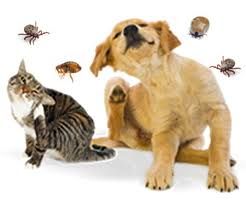
An ectoparasite is a type of parasite that lives on the external surface of its host rather than inside the host’s body. Ectoparasites feed on the host’s tissues, such as skin, blood, or bodily fluids, and can cause discomfort and irritation, and sometimes transmit diseases. Common examples of ectoparasites include:

Fleas: External parasites of mammals and birds, often found on pets like cats and dogs.

Ticks: Blood-feeding arachnids that can transmit diseases like Lyme disease.

Lice: Parasitic insects that infest hair or feathers.

Mites: Small arthropods that can cause conditions like scabies or mange.

Here are some recommended preventative measures for ectoparasite:

  1. Topical treatment: frontline, revolution, bravecto (cats)
  2. Oral treatment: nexgard, bravecto
  3. Holistic treatment: essential oils. Do check if it’s safe for your pet before use as some essential oil can be toxic to dog or cat, or both. Always dilute essential oil before use.

Endoparasites (Internal)

An endoparasite is a type of parasite that lives inside the body of its host. These organisms inhabit internal organs, tissues, or body fluids and rely on the host for nutrients, often causing harm in the process. Endoparasites can infect a wide range of hosts, including humans, animals, and plants.

Common examples of endoparasites includes:

Heartworm: A serious disease that results in severe lung disease, heart failure, other organ damage, and death in pets, mainly dogs, cats, and ferrets.

Hookworm: Parasites that affect the small intestine and lungs.

Tapeworm: Can infect animals and humans. Live in the intestines and feed off the nutrients you eat.

Here are some preventative measures for endoparasite:

  1. Topical treatment: revolution
  2. Oral treatment: heartgard (dog), drontal

Always consult your vet before administering any parasite prevention, as each pet may react differently or be better suited to specific treatments.

New Trial Service – Animal Communication

We’ve been quietly developing our Animal Communication skills and would love to offer this service as trainees rather than professionals. Practice makes perfect, and through experience, we aim to grow and improve.

Animal Communication gives us the chance to ask questions we’ve always wanted answers to. Sometimes, the responses are so quirky that they leave us laughing to the point of tears.

Even those who have crossed the rainbow bridge can bring us closure through Animal Communication, allowing time to heal our broken hearts.

Please note that Animal Communication is not a substitute for medical advice or diagnosis. It is a spiritual tool to help you understand if your fur kid may be experiencing discomfort. Always consult a professional veterinarian for any health concerns.

For more information about our new trial service, click here

Thank you 2024, Hello 2025

As we say goodbye to 2024, we want to express our heartfelt gratitude to all the pawrents and fur kids for your love, care, and support. It has been a busy year as we balanced work, school, internships, and personal life.

Returning to school wasn’t an easy decision, but pursuing a Veterinary Technology course felt like a calling. With the increasing number of senior fur kids, we recognized the importance of acquiring new knowledge and skills to better care for our furry clients. We deeply appreciate everyone’s understanding of our new schedule and are grateful for the encouragement and support you’ve given us along the way.

As 2025 approaches, we’re hopeful for an even better year ahead! Here’s to another year filled with joy and laughter!

Happy New Year from Team GPS (including our supawvisors!)