
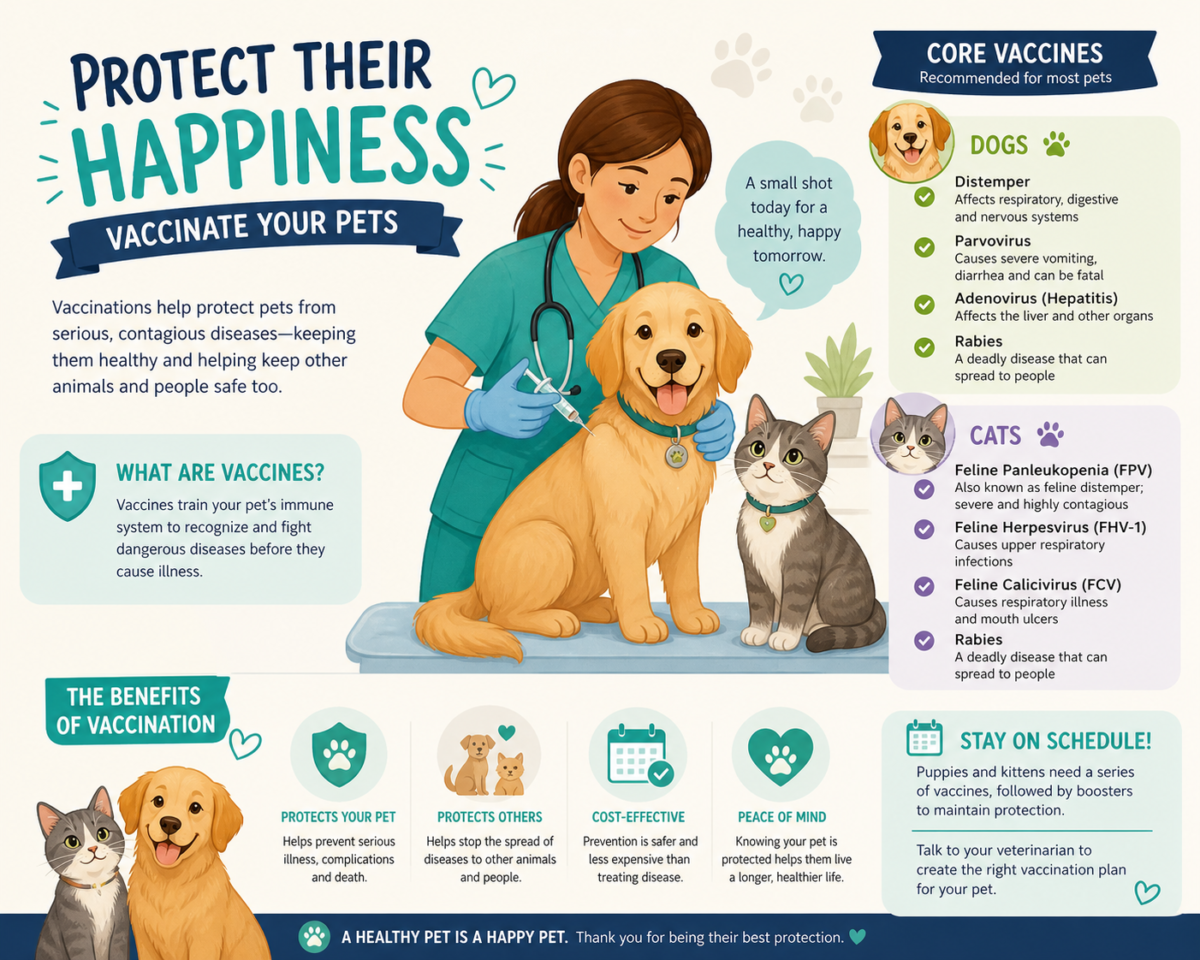
Are Vaccinations Necessary?

The short answer is Yes!

We know there will be some pawrents with a different view, such as vaccinations are not not necessary. But hear us out and read on.

What does vaccines do?

They are crucial, cost-effective preventative measures against severe, often fatal, infectious diseases.

Vaccines “train” your fur kids’ immune system to recognise and fight specific dangerous viruses and bacteria before they can cause serious illness.

Key reasons for vaccinations

  • Prevent life-threatening diseases: protect against diseases such as canine parvovirus, distemper, feline calicivirus, and panleukopenia.
  • Prevent zoonotic diseases: certain vaccines protects against infections that can transfer from pets to humans.
  • Herd immunity: high vaccination rates reduce the overall prevalence of viruses in the pet community.
  • Indoor pets still need them: Indoor pets can be exposed to viruses brought in via air, clothes, shoes, or other visiting animals.

Core Vaccinations (Singapore Guideline)

  • Dog: canine distemper, canine hepatitis, canine parvovirus, and rabies.
  • Cat: feline viral rhinotracheitis, feline calicivirus, feline panleukopenia.

When to vaccinate?

  • Puppies/Kittens: At around 6 to 8 weeks old, with boosters every 3 to 4 weeks until 16 weeks or older.
  • Adults: Regular boosters are necessary. Annually or every 3 years depending on the vaccine type and veterinarian advice.

Titer Test

You can opt to do a titer test if you do not want to over vaccinate your fur kid. A titer test is a blood test that measures the concentration of specific antibodies in your fur kid’s blood to determine if they still have protective immunity from previous vaccination. It is a proactive tool to avoid over vaccinating your fur kid and ensuring that they only receives booster shots when necessary.

Do check and consult with your veterinarians if you have doubts or wish to know more about vaccinations for your fur kids.
Ectoparasite & Endoparasite Preventative Healthcare

Dealing with parasites, whether ectoparasites or endoparasites, can be frustrating. However, there are always preventive measures we can take to keep our furry companions safe and healthy.

Here’s a brief summary of what they are.

Ectoparasites (External)

An ectoparasite is a type of parasite that lives on the external surface of its host rather than inside the host’s body. Ectoparasites feed on the host’s tissues, such as skin, blood, or bodily fluids, and can cause discomfort and irritation, and sometimes transmit diseases. Common examples of ectoparasites include:

Fleas: External parasites of mammals and birds, often found on pets like cats and dogs.

Ticks: Blood-feeding arachnids that can transmit diseases like Lyme disease.

Lice: Parasitic insects that infest hair or feathers.

Mites: Small arthropods that can cause conditions like scabies or mange.

Here are some recommended preventative measures for ectoparasite:

  1. Topical treatment: frontline, revolution, bravecto (cats)
  2. Oral treatment: nexgard, bravecto
  3. Holistic treatment: essential oils. Do check if it’s safe for your pet before use as some essential oil can be toxic to dog or cat, or both. Always dilute essential oil before use.

Endoparasites (Internal)

An endoparasite is a type of parasite that lives inside the body of its host. These organisms inhabit internal organs, tissues, or body fluids and rely on the host for nutrients, often causing harm in the process. Endoparasites can infect a wide range of hosts, including humans, animals, and plants.

Common examples of endoparasites includes:

Heartworm: A serious disease that results in severe lung disease, heart failure, other organ damage, and death in pets, mainly dogs, cats, and ferrets.

Hookworm: Parasites that affect the small intestine and lungs.

Tapeworm: Can infect animals and humans. Live in the intestines and feed off the nutrients you eat.

Here are some preventative measures for endoparasite:

  1. Topical treatment: revolution
  2. Oral treatment: heartgard (dog), drontal

Always consult your vet before administering any parasite prevention, as each pet may react differently or be better suited to specific treatments.