
Are Vaccinations Necessary?

The short answer is Yes!

We know there will be some pawrents with a different view, such as vaccinations are not not necessary. But hear us out and read on.

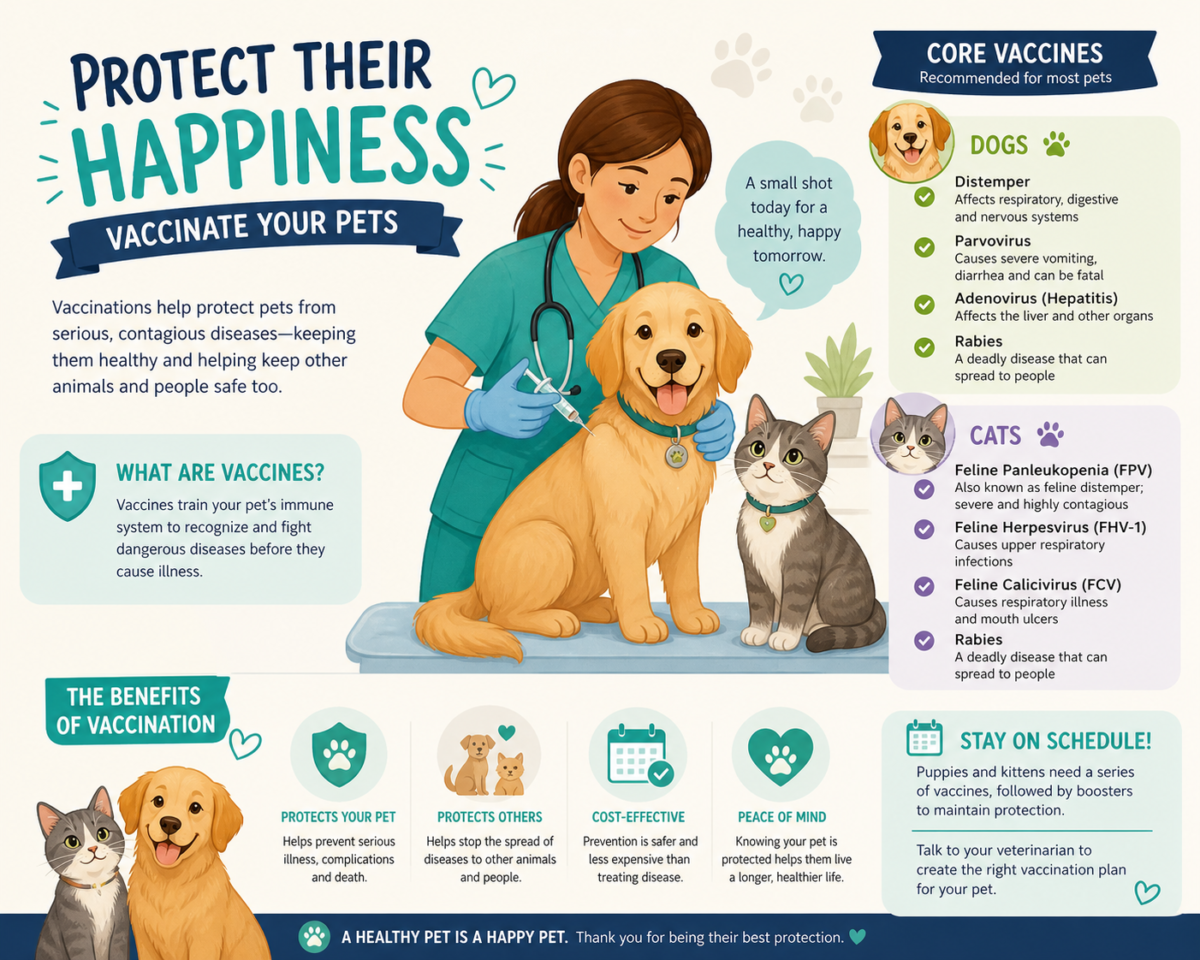
What does vaccines do?

They are crucial, cost-effective preventative measures against severe, often fatal, infectious diseases.

Vaccines “train” your fur kids’ immune system to recognise and fight specific dangerous viruses and bacteria before they can cause serious illness.

Key reasons for vaccinations

  • Prevent life-threatening diseases: protect against diseases such as canine parvovirus, distemper, feline calicivirus, and panleukopenia.
  • Prevent zoonotic diseases: certain vaccines protects against infections that can transfer from pets to humans.
  • Herd immunity: high vaccination rates reduce the overall prevalence of viruses in the pet community.
  • Indoor pets still need them: Indoor pets can be exposed to viruses brought in via air, clothes, shoes, or other visiting animals.

Core Vaccinations (Singapore Guideline)

  • Dog: canine distemper, canine hepatitis, canine parvovirus, and rabies.
  • Cat: feline viral rhinotracheitis, feline calicivirus, feline panleukopenia.

When to vaccinate?

  • Puppies/Kittens: At around 6 to 8 weeks old, with boosters every 3 to 4 weeks until 16 weeks or older.
  • Adults: Regular boosters are necessary. Annually or every 3 years depending on the vaccine type and veterinarian advice.

Titer Test

You can opt to do a titer test if you do not want to over vaccinate your fur kid. A titer test is a blood test that measures the concentration of specific antibodies in your fur kid’s blood to determine if they still have protective immunity from previous vaccination. It is a proactive tool to avoid over vaccinating your fur kid and ensuring that they only receives booster shots when necessary.

Do check and consult with your veterinarians if you have doubts or wish to know more about vaccinations for your fur kids.


Complete, Balanced and Complimentary Food

When it comes to feeding our fur kids, we usually go with the most convenient commercial food there is on the market which is the dry food (kibbles). Sometimes, we didn’t read the ingredient lists and just get what’s affordable at that point of time. But do you know, not all food at the pet store are complete or balanced? Some of them might just be a complimentary food that we add as a topper or feed it as tea break.

Here’s a break down of what complete, balanced and complimentary food are:

1. Complete Food – This type of pet food contains all the essential nutrients (proteins, fats, carbohydrates, vitamins, and minerals) in the right proportions to meet the daily nutritional needs of a pet. Pets can thrive on a complete diet without needing additional supplements.


2. Balanced Food – A balanced diet ensures that the nutrients are provided in the correct ratios for a pet’s specific life stage (puppy/kitten, adult, senior), activity level, and health status. A balanced food is always complete, but some complete foods may not be fully balanced for specific needs.


3. Complementary Food – This food is meant to be fed alongside other foods because it does not contain all essential nutrients in the right amounts. Treats, mixers, and toppers fall into this category. They enhance variety and palatability but should not replace complete and balanced meals.

Even if the packet of food is cheap and affordable, as long as it is both complete and balanced, it is good enough. Sometimes expensive doesn’t mean it’s good. Always read the labels and check the ingredient list.

Look for food that are AAFCO (Association of American Feed Control Officials) labels. Or AAFCO equivalent if the brand isn’t from America. With the AAFCO label, it is definitely complete and balanced, thus safe to give your fur kids as the main diet.